
We are a full Service DME
3753 Mission Ave # 114, Oceanside, CA 92058
Phone: (760) 722-9802
 We understand that finding the right wheelchair manual or power, it is our goal to consider your individual needs, including mobility requirements, comfort preferences, and living environment. Key factors include seat size and weight capacity, battery life and range, maneuverability. Most power chairs has features to fit your mobility needs like suspension and control systems. If you are seeking professional guidance from a mobility specialist we can help ensure you choose the mobility equipment that best suits your lifestyle.
Detailed Considerations:
Mobility Needs and Terrain: Determine whether you need a power wheelchair primarily for indoor or outdoor use, and assess the types of terrain you’ll encounter (e.g., smooth surfaces, ramps, uneven ground).

Weight Capacity and Size: Ensuring that your wheelchair can comfortably support your weight and fit through doorways and in your living space is essential to your daily living needs.
Seat Comfort and Adjustability: Prioritize adjustable seating features like seat height, depth, backrest angle, and cushions to ensure optimal comfort and posture support when choosing your seating and adjustability features.
Battery Life and Range: Typically a battery charge should allow you to travel without worry. So make sure you talk to our professionals when you are choosing your new wheelchair with a battery that provides sufficient range to meet your daily needs.
Maneuverability and Turning Radius: Mobility Products today can navigate tight spaces, look for a wheelchair with a small turning radius and good maneuverability.
Control Options: Explore different control systems (e.g., joystick, head controls, sip-and-puff) and choose one that is easy for you to operate, your Mobility Specialists or ATP will help you look and choose the best options.
Seat Elevation Options: Now standard on all Power wheelchairs, this option allows you to reach the world. Finding the right seat elevation for a power wheelchair involves considering several factors, including user height, intended use, and the need for transfers and reaching tasks. Seat height typically ranges from 16 to 21 inches, with 19 inches being common, but some individuals may need as low as 14 inches or as high as 23 inches. So lets talk about reaching the stars!
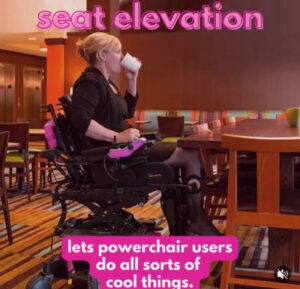
Key Considerations:User Height: Taller individuals generally require a higher seat height.
Reaching: It can improve access to high shelves and other objects, reducing strain on the upper extremities.
Social Interaction: Being at eye level with peers can improve social interaction and communication.
Functional Needs: Consider how the seat elevation will be used for daily activities like work, home tasks, and community access.
 Transfers:Seat elevation can make transfers easier, especially when transferring to a lower surface.
Safety Features:
Look for anti-tip wheels, seat belts, and sturdy frames for added safety.
Ease of Transport and Storage:
If you plan to travel with your wheelchair, consider models that are foldable, lightweight, or easily disassembled.
Living Conditions: Evaluating your home environment is key to making sure that the wheelchair you need can navigate your living space, including doorways, bathrooms, and around furniture.
Customization and Adjustability: Look for wheelchairs with adjustable features like armrests, footrests, and seating systems to customize the fit and maximize comfort, just ask us we can show you all the newest and latest technology.
Professional Guidance: Go with A Pro: Consulting with a mobility specialist at American Mobility Center can provide valuable insights and help you make an informed decision. We got you covered.Test Drive A power wheelchair Contact us! Whenever possible, test drive the wheelchair in your intended environment to assess its performance and suitability.
OK Let’s Get Started!!!